sysarticles

How do I manage IT infrastructure upgrades?

Upgrading IT infrastructure takes planning, execution, and post-upgrade review. Here’s how to run it without surprises. 1. Assess What You Have Inventory every hardware, software, storage, and network component. Flag anything outdated or underperforming. Pull current performance metrics. Identify bottlenecks and the systems that hit them. Map dependencies between systems, applications, and services. Missed dependencies […]

How do I recover data from a failed RAID 5 array?

Recovering data from a failed RAID 5 array is complex and demands careful handling to avoid making things worse. RAID 5 stripes data and parity across all drives. The array survives a single drive failure. Two or more failed drives, or corruption, and you have a real problem. Here’s a step-by-step approach. Step 1: Assess […]

How do I optimize IT infrastructure for Kafka-based real-time data streaming?

Optimizing IT infrastructure for Kafka-based real-time data streaming requires careful planning, configuration, and resource allocation to ensure high performance, scalability, reliability, and fault tolerance. Below are key considerations and strategies. 1. Design a Kafka Cluster Architecture Cluster size and brokers: Determine the number of brokers based on expected throughput and scalability needs. Kafka scales horizontally; […]

How do I troubleshoot IT infrastructure storage replication delays?

Troubleshooting storage replication delays takes a systematic approach. Here’s how to work through it. Step 1: Gather Information Understand the scope Which systems or applications are affected? Is the delay consistent or time-specific? What replication technology is in use (SAN, NAS, object storage, software-defined)? Document current performance metrics Replication latency (round-trip time, bandwidth usage) Throughput […]

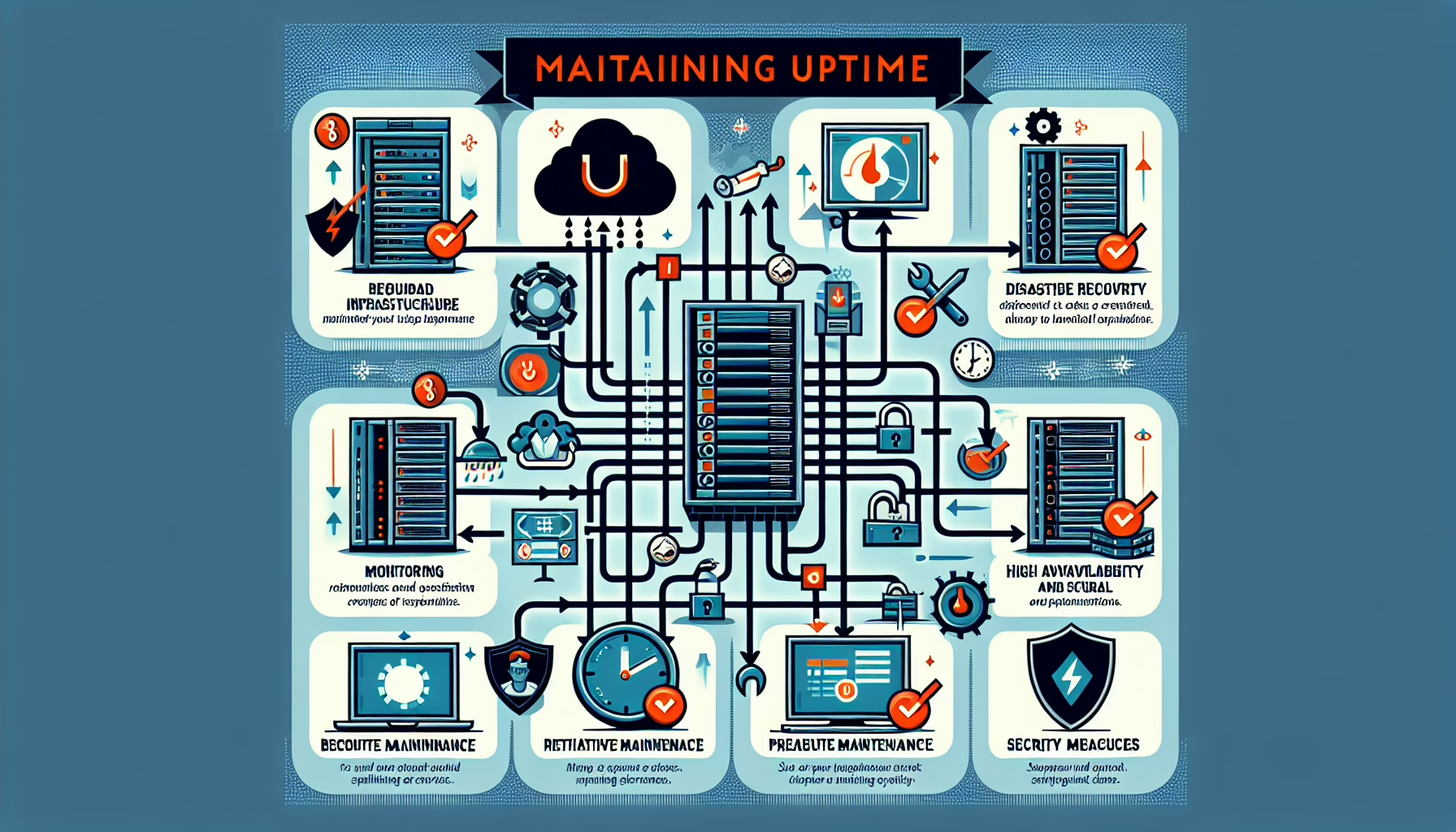
How do I maintain uptime in a datacenter?

1. Redundant infrastructure Power: Deploy UPS units, backup generators, and dual power feeds for continuous supply. Network: Use multiple ISPs and redundant paths (BGP) to prevent connectivity loss. Cooling: Implement N+1 or 2N cooling redundancy to handle equipment heat during failures. 2. Disaster recovery and backup Back up critical systems and data regularly; store copies […]

How do I configure high availability for critical servers?

Configuring high availability (HA) for critical servers keeps downtime to a minimum when hardware or software fails. The approach depends on your application requirements, server types, and the technologies you’re running. Here’s how to think through it. 1. Assess Criticality and Requirements Identify which servers and applications need high availability — database servers, web servers, […]

Scroll to top