backup and disaster recovery

How do I perform a bare-metal restore for critical servers?

A bare-metal restore recovers a server from scratch after hardware failure, data corruption, or a similar catastrophe. Here’s how to do it: Preparation Before Disaster Have these in place before you need them: Regular backups: Implement a strategy (full, differential, incremental). Use enterprise tools (Veeam, Commvault, Veritas NetBackup, Acronis). Store copies on-premises, in cloud, and […]
How do I set up a storage cluster for high availability?

Setting up a storage cluster for high availability requires planning, the right hardware and software, and configuration for redundancy, fault tolerance, and automatic failover. Here’s a step-by-step guide for data center and storage infrastructure teams: Step 1: Define Requirements Capacity: Estimate storage needs for current and future workloads. Performance: Determine IOPS, latency, and throughput requirements. […]

How do I ensure datacenter redundancy and failover capabilities?

Design your datacenter for redundancy from the ground up. Here’s what that looks like in practice: 1. Design for Redundancy Geographic redundancy: Use multiple datacenters in different regions to survive regional disasters. Power redundancy: Run diverse power feeds, UPS units, and generators so no single point kills the floor. Network redundancy: Connect to multiple ISPs […]

How do I troubleshoot IT infrastructure storage replication delays?

Troubleshooting storage replication delays takes a systematic approach. Here’s how to work through it. Step 1: Gather Information Understand the scope Which systems or applications are affected? Is the delay consistent or time-specific? What replication technology is in use (SAN, NAS, object storage, software-defined)? Document current performance metrics Replication latency (round-trip time, bandwidth usage) Throughput […]

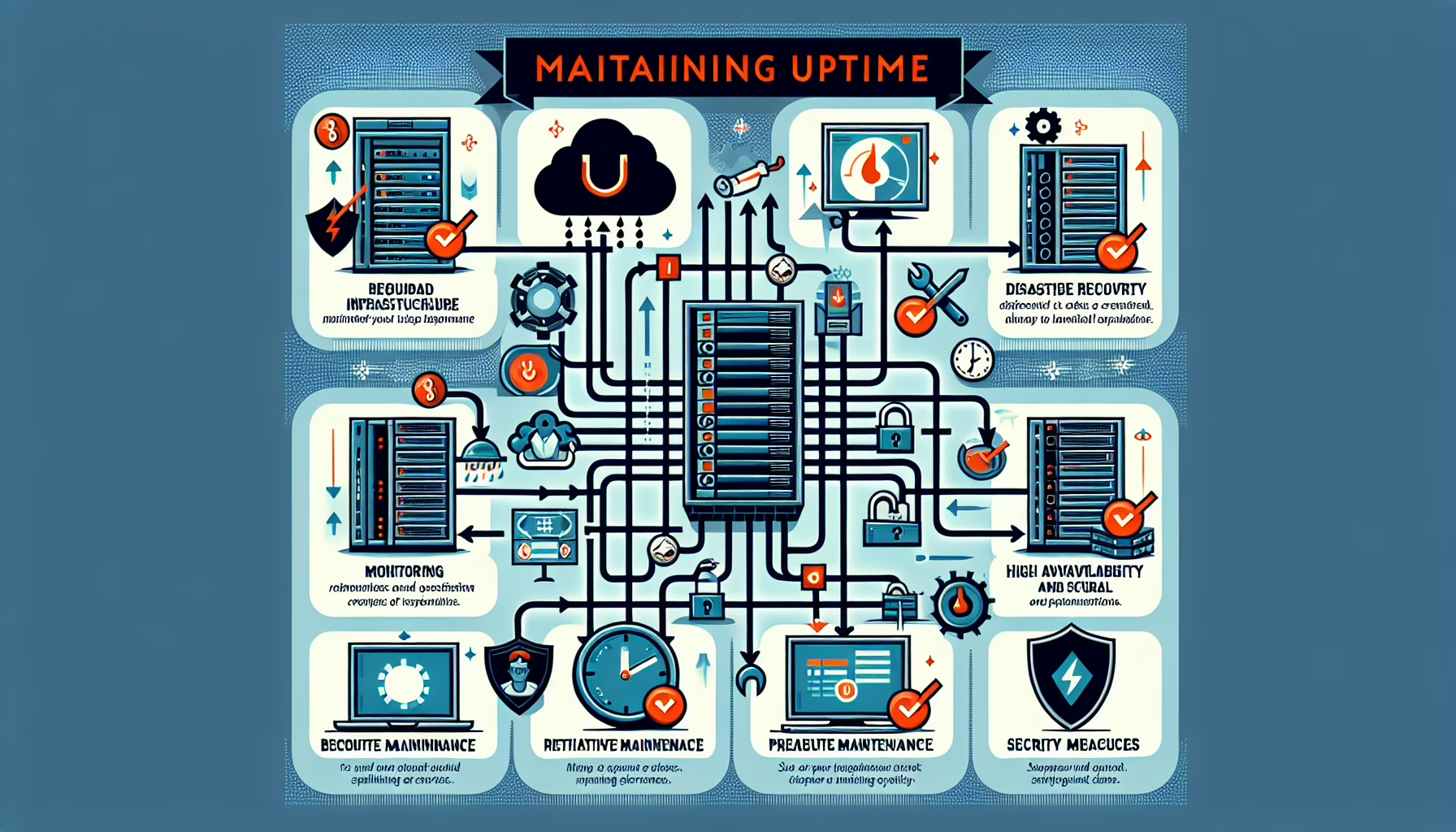
How do I maintain uptime in a datacenter?

1. Redundant infrastructure Power: Deploy UPS units, backup generators, and dual power feeds for continuous supply. Network: Use multiple ISPs and redundant paths (BGP) to prevent connectivity loss. Cooling: Implement N+1 or 2N cooling redundancy to handle equipment heat during failures. 2. Disaster recovery and backup Back up critical systems and data regularly; store copies […]

How do I configure high availability for critical servers?

Configuring high availability (HA) for critical servers keeps downtime to a minimum when hardware or software fails. The approach depends on your application requirements, server types, and the technologies you’re running. Here’s how to think through it. 1. Assess Criticality and Requirements Identify which servers and applications need high availability — database servers, web servers, […]

Scroll to top