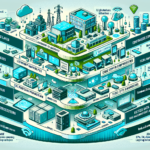
Configuring IT infrastructure for real-time fraud detection systems demands careful planning to ensure performance, scalability, reliability, and security. These systems rely on advanced analytics, machine learning, and real-time data processing. Here’s a practical guide to building that infrastructure:
1. Define Requirements
Fraud detection scope: Determine the fraud types (financial, e-commerce, identity theft) and evaluate data volume, velocity, and variety.
Performance targets: Low latency for real-time detection; high throughput for large data streams.
Availability and reliability: Target 99.99% uptime with fault tolerance.
Regulatory compliance: Meet GDPR, PCI DSS, CCPA, or other applicable regulations.
2. Core IT Infrastructure Components
Compute
Use servers with multi-core CPUs and ample RAM for high-speed data processing; add GPUs (e.g., NVIDIA A100) for machine learning workloads.
Scale dynamically with virtualization or containerization; deploy Kubernetes clusters to orchestrate containerized fraud detection services.
Storage
Use NVMe SSDs for low-latency storage; consider solutions optimized for big data analytics (e.g., Dell PowerStore, NetApp AFF).
Store historical training data in object storage: AWS S3, Azure Blob Storage, or on-prem Ceph.
Implement storage tiering for warm and cold data to control costs and meet retention requirements.
Networking
Deploy high-speed networking (10/25/100 Gbps Ethernet) and use SDN for traffic optimization.
Consider edge computing to process data closer to the source and reduce detection latency.
Databases
Use in-memory databases (Redis, Memcached) for ultra-fast lookups.
Deploy NoSQL databases (MongoDB, Cassandra) for unstructured data.
Use Kafka or Apache Pulsar for real-time event streaming and ingestion.
3. AI and Machine Learning Infrastructure
Train models on GPUs (NVIDIA A100, V100) using distributed frameworks like TensorFlow, PyTorch, or Horovod.
Serve inference with optimized systems such as NVIDIA Triton Inference Server or ONNX Runtime.
Automate training, deployment, and monitoring via MLOps tools (Kubeflow, MLflow).
For rapid prototyping, evaluate cloud AI services like AWS Fraud Detector or Azure Machine Learning.
4. Real-Time Data Processing Framework
Process streams with Apache Flink, Spark Streaming, or Apache Storm.
Handle high-throughput ingestion with message brokers like RabbitMQ or Kafka.
Build event-driven microservices that react to suspicious transactions in real time.
5. Security and Compliance
Encrypt data at rest and in transit with TLS and AES-256.
Enforce RBAC and MFA; integrate with an identity provider (Okta, Azure AD).
Deploy IDS/IPS to monitor and block suspicious activity.
Centralize logs with the ELK Stack or Splunk for audit trails and compliance.
6. High Availability and Disaster Recovery
Deploy redundant servers, network links, and storage.
Distribute traffic with load balancers (HAProxy, NGINX).
Run continuous backups (Veeam, Rubrik) and test disaster recovery plans regularly.
7. Monitoring and Analytics
Monitor system performance with Prometheus, Grafana, or Datadog; alert on anomalies and resource saturation.
Aggregate logs via ELK Stack or Splunk.
Continuously tune database queries, model inference, and application code.
8. Cloud vs. On-Premises
Cloud: Leverage AWS, Azure, or GCP for scalability and managed services (e.g., AWS Fraud Detector, BigQuery, Azure Synapse).
On-premises: Keep sensitive data on-prem for compliance; consider hybrid for flexibility.
9. Testing and Validation
Test with realistic workloads and data that mimic production fraud patterns.
Stress test to verify peak load handling and failover behavior.
Measure end-to-end latency to confirm real-time SLAs.
10. Continuous Improvement
Feed detection outcomes back into model retraining and system tuning.
Apply hardware, software, and security updates on a regular cadence.
Ali YAZICI is a Senior IT Infrastructure Manager with 15+ years of enterprise experience. While a recognized expert in datacenter architecture, multi-cloud environments, storage, and advanced data protection and Commvault automation , his current focus is on next-generation datacenter technologies, including NVIDIA GPU architecture, high-performance server virtualization, and implementing AI-driven tools. He shares his practical, hands-on experience and combination of his personal field notes and “Expert-Driven AI.” he use AI tools as an assistant to structure drafts, which he then heavily edit, fact-check, and infuse with my own practical experience, original screenshots , and “in-the-trenches” insights that only a human expert can provide.