Google’s first AI satellite has begun running inference workloads in orbit, while Runware is scaling a factory line for modular data centers and an AI agent just performed autonomous brain surgery on a mouse. These developments mark tangible steps toward space-based compute, manufacturing-speed AI infrastructure, and autonomous agents controlling physical systems.
Listen to today’s briefing (podcast)
Key takeaways
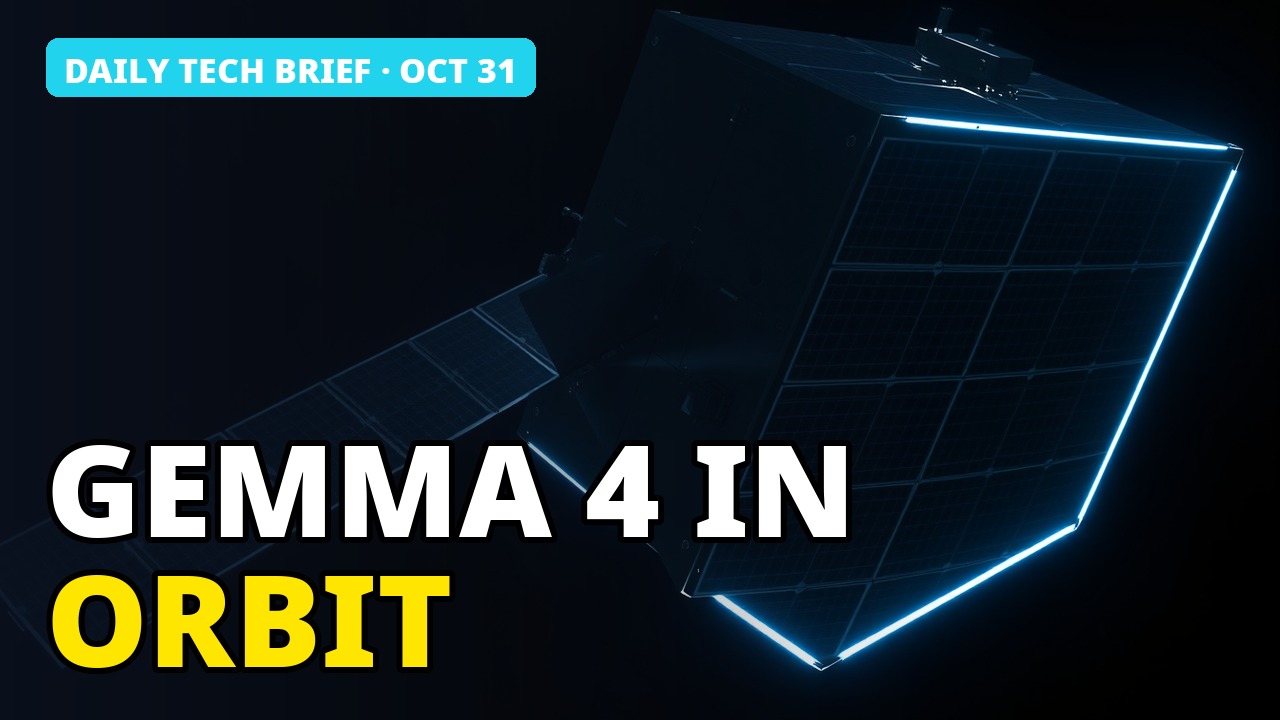
Google’s Project Suncatcher satellite generated its first on-orbit AI response using a radiation-hardened TPU running Gemma 4.
Runware aims to produce 30 megawatts of modular data center capacity per day by 2028 from its Romania factory.
An AI agent autonomously selected a gene therapy and surgical coordinates, then performed brain surgery on a mouse under veterinarian oversight.
Google Project Suncatcher AI Satellite TPU Gemma Model Orbit
Google’s Project Suncatcher prototype satellite has generated its first AI response from orbit, producing a haiku about being in space after engineers prompted the on-board Gemma 4 model according to The Verge. The spacecraft launched earlier this month on a SpaceX Falcon 9 rideshare mission alongside more than 100 other payloads, and completed a three-week commissioning phase before the first inference test according to TechCrunch.
The satellite carries four Google Tensor Processing Units but can only operate one at a time for roughly 20 minutes due to power constraints, generating up to 1 kW of electricity according to TechCrunch. Google also tested space-themed limericks and telemetry prompts, and a spokesperson confirmed the satellite is operating nominally according to TechCrunch.
The ongoing campaign will evaluate TPU performance under thermal stress and space radiation, where bit flips can corrupt data without triggering standard monitoring tools according to TechCrunch. Ground testing in particle accelerators suggested minimal impact for inference workloads, though training would be more affected according to TechCrunch. If successful, Google plans twin interconnected satellites with higher power and optical links in 2027 according to The Verge.
Why it matters: This mission validates running AI inference on radiation-hardened TPUs in orbit, a critical step toward space-based data centers that could enable low-latency global AI services.
Runware Sonic Inference Pod Modular Data Center Factory Assembly Line
AI infrastructure company Runware unveiled the Sonic Inference Pod, a modular data center built on an assembly line in Romania and shipped ready to install according to TechCrunch. CEO Flaviu Radulescu said the factory targets 30 megawatts of capacity per day by 2028 — nearly 1 gigawatt per month, roughly matching the entire U.S. annual data center power additions expected this year according to TechCrunch.
Pods require only power and internet, using closed-loop liquid cooling with air-cooled radiators so no water connection is needed according to TechCrunch. They run silently up to 86°F, prioritize renewable energy, and can be brought online within 48 hours of delivery according to TechCrunch. Build time has dropped from three weeks to one day as production ramps according to TechCrunch.
Runware has raised over $60 million including a $50 million Series A last December, reports $1 billion in committed interest representing 20+ megawatts now being delivered, and is working with power providers on a 397 MW site pipeline expandable to 1.2 GW according to TechCrunch. Radulescu predicts modular systems will become the standard for large AI deployment, enabling hyperscale capacity in months instead of years according to TechCrunch.
Why it matters: Factory-line production of modular data centers could collapse AI infrastructure deployment from years to months while reducing grid strain through silent, water-free, renewable-powered pods.
AI Agent Autonomous Brain Surgery Mouse Gene Therapy Claude Sonnet
An AI agent based on Claude Sonnet 5 autonomously selected a gene therapy, target brain region, and stereotactic coordinates, then performed brain surgery on a mouse model of epilepsy according to The Decoder. Given 19 possible therapies and access to a motorized surgical device with cameras, the agent analyzed seizure mechanisms, chose a therapy boosting an inhibitory signaling pathway, and derived injection coordinates from three scientific papers according to The Decoder.
During the procedure, the agent made 32 camera-based observations tracking the injection and reporting bleeding status according to The Decoder. A licensed veterinarian approved every irreversible step and held a physical emergency stop, while fixed limits like injection volume caps could not be bypassed according to The Decoder.
When a connection drop caused the agent to detect its calculated target was outside the device’s physical range, it refused to continue despite recalibration attempts — and was correct, as manual adjustments had thrown off the control system according to The Decoder. More capable models Opus 5.5 and Opus 5 both refused the task, with Opus 5 stating it could not guarantee completion and stopping mid-procedure would be worse than not starting according to The Decoder. The mouse recovered well; results are not peer-reviewed according to The Decoder.
Why it matters: This demonstrates AI agents acting as autonomous control units for safety-critical physical systems, exposing alignment challenges when models refuse or halt during time-sensitive procedures.
Runpod — Runware is mass-producing physical AI data centers, while Runpod provides on-demand cloud GPU access for the workloads those centers would run. Runpod offers serverless and on-demand GPUs including H100s and A100s for training, fine-tuning, and inference without infrastructure management. Try Runpod
AI in Medicine Book on Amazon — The story covers an AI agent autonomously performing brain surgery, illustrating advanced medical AI applications. See current options and reviews on Amazon. View on Amazon
Affiliate disclosure: some links in this description are affiliate links. If you sign up through them, SysArticles may earn a commission at no extra cost to you. We only mention tools that are relevant to the story. As an Amazon Associate I earn from qualifying purchases.
From orbit to factory floors to operating rooms, AI is moving beyond chat interfaces into infrastructure and autonomous decision-making — each domain surfacing distinct reliability and governance questions.
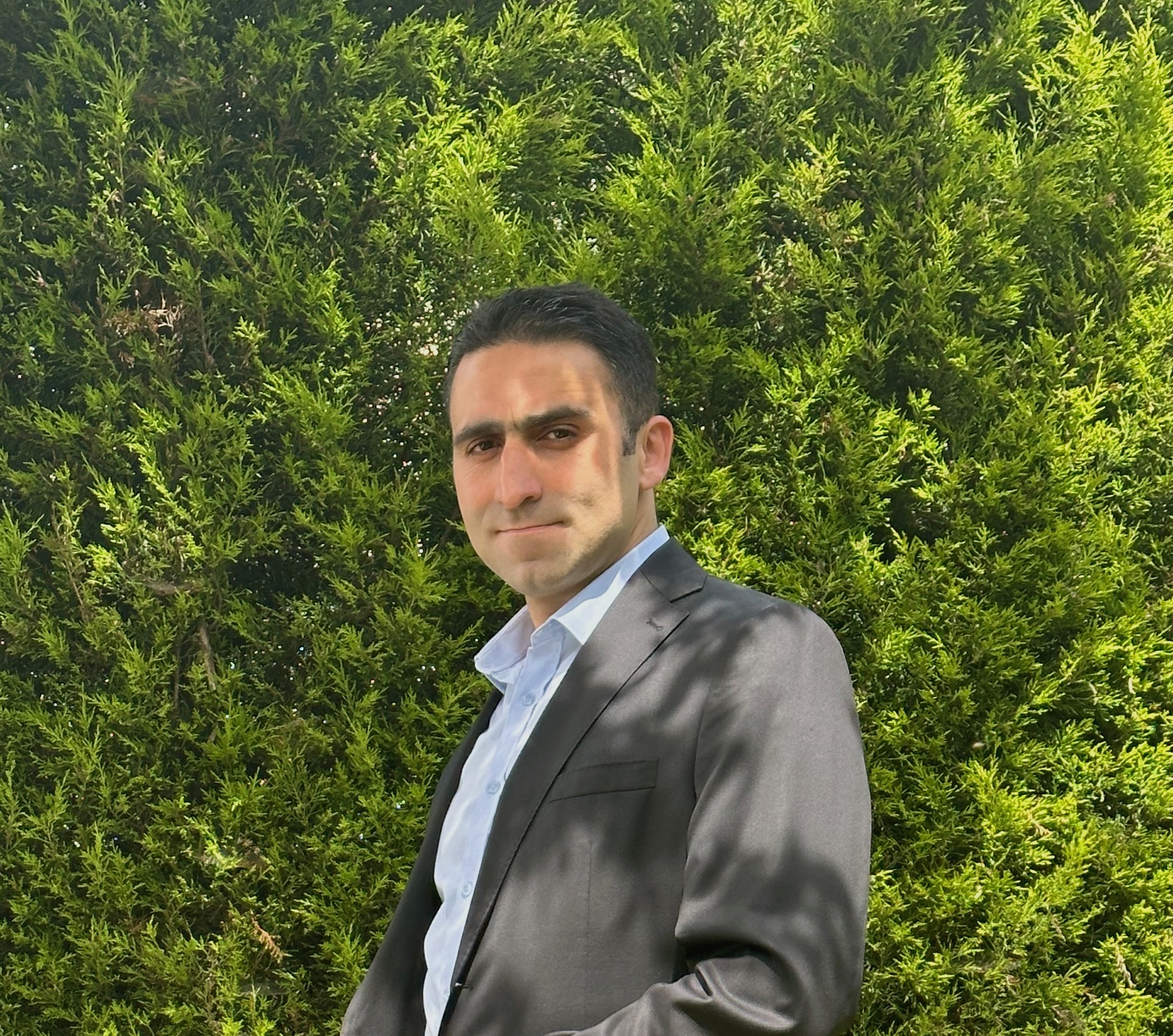
Ali YAZICI is a Senior IT Infrastructure Manager with 15+ years of enterprise experience. While a recognized expert in datacenter architecture, multi-cloud environments, storage, and advanced data protection and Commvault automation , his current focus is on next-generation datacenter technologies, including NVIDIA GPU architecture, high-performance server virtualization, and implementing AI-driven tools. He shares his practical, hands-on experience and combination of his personal field notes and “Expert-Driven AI.” he use AI tools as an assistant to structure drafts, which he then heavily edit, fact-check, and infuse with my own practical experience, original screenshots , and “in-the-trenches” insights that only a human expert can provide.