Today’s briefing covers two critical PHP vulnerabilities affecting the majority of the web, supply chain risks in VS Code extensions, the restoration of Starlink service in Ukraine, NVIDIA’s agent-driven GPU optimization on Kubernetes, and Google Cloud’s persistent Gemini agents that survive device sleep.
Listen to today’s briefing (podcast)
Two Critical PHP Vulnerabilities Threaten Majority of the Internet
On Wednesday, October 24, 2026, two critical PHP vulnerabilities dubbed PHP2Shell (CVE-2026-109618 and CVE-2026-109619) were publicly disclosed, according to The Verge, Ars Technica, and TechCrunch. The flaws allow unauthenticated remote code execution on any system running PHP, granting attackers full control without a password. The PHP Foundation released patches the same day and provided early access to major internet companies and web hosts under embargo.
PHP powers around 70% of the web-facing internet, including platforms such as WordPress, Drupal, Joomla, and MediaWiki, which runs Wikipedia. Banks, retailers, gaming sites, online stores, hospitals, and some government agencies took servers offline to apply patches. Governments urged citizens and organizations to mitigate risks, but security researchers warn that a large number of systems worldwide remain unpatched and vulnerable to hacks and data theft.
The bugs were discovered in 2024 by researchers at Calif but were not considered exploitable at the time. Calif alerted the PHP Foundation, which coordinated disclosure under a tightly guarded embargo. Amazon detected exploitation of PHP2Shell about a week before patches were available. Calif participated in the Hack the Planet initiative by OpenAI and Wiz, which verified proof-of-concept exploits; AI assisted in exploiting the bug, though Calif stated, “No model is simply capable of unearthing ‘all bugs’ with simple prompts. At least for now.” PHP is open-source, free, and maintained by unpaid open-source maintainers.
Why it matters: IT professionals must urgently patch PHP installations to prevent unauthenticated remote code execution that could lead to data breaches and system compromise; everyday people face risk of personal data theft from banks, hospitals, and other services if those sites remain unpatched.
Claimable VS Code Extension IDs Enable Supply Chain Attacks, OWASP Research Shows
Security researcher Rafael Silva of Iikido Security, who has presented at Defcon and Rootcon, detailed how claimable VS Code extension IDs create a supply chain attack vector. VS Code is installed on over 75% of developer desktops per a Stack Overflow survey, and anyone can publish extensions on the VS Code Marketplace or Open VSX without significant barriers. Microsoft implemented a default two-hour cooldown for extension auto-updates, but extensions run with full system privileges and no sandbox, giving them complete access to execute whatever the user can.
VS Code forks including Cursor, Windsurf, and VSCodium account for 18-22% of market share. A VS Code extension is a JavaScript project packaged as a .vsix file — essentially a glorified zip file. Developer environments are among the highest-access systems in companies, containing credentials, source code, and API keys. Tested EDR solutions did not monitor or block IDE extensions, creating a security blind spot. Malicious VS Code extensions have been reported in headlines for about a year and a half prior to last year’s talk, and the situation has worsened since.
Why it matters: IT professionals must recognize that IDE extensions are an unmonitored attack surface with full system access, bypassing traditional endpoint defenses; everyday people are affected because compromised developer tools can lead to supply chain attacks that ultimately breach the software and services they use daily.
Starlink Service Restored in Ukraine After Reported Throttling Order
SpaceX appears to have lifted restrictions on the Ukrainian military’s use of Starshield, the military-grade version of Starlink. The Wall Street Journal reports that Defense Minister Evgeniy Khmara told reporters Starshield is working normally again, though the military is still conducting tests and has not received an explanation for the restrictions. Over a 10-day period, Ukrainian drones lost internet connectivity when flying at speeds around 100 miles per hour, causing loss of control of some drones and forcing others to fly more slowly, increasing vulnerability.
President Donald Trump reportedly called SpaceX CEO Elon Musk on Wednesday and asked him to restore Starshield service. Both Trump and Musk have criticized Ukraine’s President Volodymyr Zelensky, with Musk recently posting, “Zelensky has gone too far.” The Wall Street Journal previously reported that Musk ordered SpaceX to throttle Ukraine’s Starlink access, though some sources claimed he discussed it with the Trump administration first. Musk claimed on X that Ukraine had “violated Starlink terms of service and used it for offensive drone strikes to kill people,” and stated: “Were Starlink to be turned off, the Ukrainian front line would collapse immediately. This is NOT a threat, it is simply a statement of fact.”
Why it matters: For IT professionals, this underscores the critical dependency of modern military and civilian infrastructure on commercial satellite internet and the geopolitical risks of service manipulation; for everyday people, it illustrates how internet access can be leveraged as a strategic weapon in conflicts, potentially affecting both combat operations and civilian connectivity.
NVIDIA Explores Agent-Driven GPU Utilization Optimization on Kubernetes at KubeCon
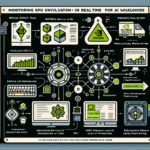
Vivek Kolasani (VC Kulasani) from NVIDIA will speak at KubeCon + CloudNativeCon North America. NVIDIA and AWS teams will demonstrate GPU sharing and agent-driven placement to pack multiple AI models on Kubernetes infrastructure. The session aims to improve GPU utilization while still meeting performance goals for AI inference workloads.
The presentation is scheduled for November 10 at 2:50 p.m. in Salt Lake City and targets professionals working on AI inference, Kubernetes, or GPU efficiency.
Why it matters: For IT professionals, this showcases cutting-edge GPU optimization techniques that can increase infrastructure efficiency and reduce costs for AI workloads on Kubernetes; for everyday people, these advancements could lead to more responsive and affordable AI-powered services and applications.
Google Cloud Introduces Persistent Gemini Agents That Survive Laptop Lid Closure
Most agent workflows tie users to a specific open tab, IDE window, or active terminal session. If the machine sleeps, the connection blips, or the lid is closed, the entire task wraps and dies. By running a persistent cloud actor, the execution runtime doesn’t care where the user is.
Users aren’t tied to a client; they interface with an active environment that stays alive whether reached from Slack, a CLI, a phone, or even Google Docs. This eliminates the need to keep a laptop cracked open to prevent sleep and keep a local terminal running while walking between meetings.
Why it matters: For IT professionals, persistent cloud agents eliminate workflow disruption from device sleep or network interruptions, enabling seamless cross-device development and operations; for everyday people, AI assistants continue working in the background even when you close your laptop or switch between phone, tablet, and computer.
Runpod — Runpod provides on-demand GPU infrastructure that complements Kubernetes-based inference workloads discussed in the NVIDIA presentation. Try Runpod to access serverless GPUs for your inference workloads without managing underlying infrastructure. Try Runpod
Affiliate disclosure: some links in this description are affiliate links. If you sign up through them, SysArticles may earn a commission at no extra cost to you. We only mention tools that are relevant to the story.
From critical infrastructure patching to developer tool security and AI workflow resilience, today’s stories highlight the interconnected risks and innovations shaping modern technology operations.
Ali YAZICI is a Senior IT Infrastructure Manager with 15+ years of enterprise experience. While a recognized expert in datacenter architecture, multi-cloud environments, storage, and advanced data protection and Commvault automation , his current focus is on next-generation datacenter technologies, including NVIDIA GPU architecture, high-performance server virtualization, and implementing AI-driven tools. He shares his practical, hands-on experience and combination of his personal field notes and “Expert-Driven AI.” he use AI tools as an assistant to structure drafts, which he then heavily edit, fact-check, and infuse with my own practical experience, original screenshots , and “in-the-trenches” insights that only a human expert can provide.