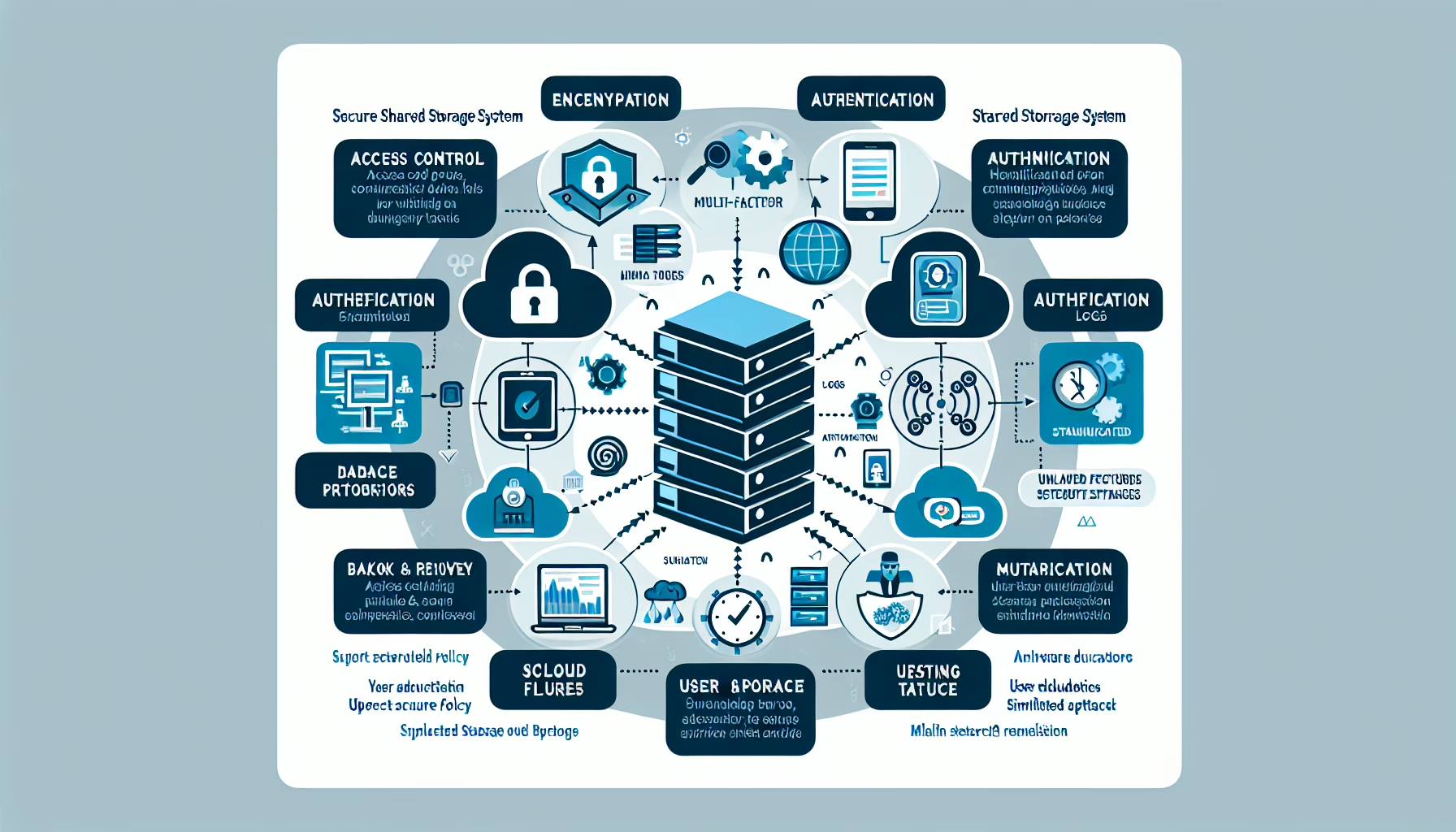
Securing government IT infrastructure demands strict adherence to policies, standards, and best practices. Here are key practices for government environments:
1. Implement Strong Access Controls
Identity and Access Management (IAM): Use role-based access control (RBAC) and least privilege so users only have necessary access.
Multi-Factor Authentication (MFA): Require MFA for all users, especially administrators.
Privileged Account Management (PAM): Monitor and secure privileged accounts to reduce misuse risk.
2. Network Security
Segmentation: Separate sensitive systems, services, and data to limit lateral movement.
Firewalls: Deploy next-generation firewalls (NGFWs) and intrusion prevention systems (IPS) to monitor and block malicious traffic.
Zero Trust Architecture: Verify every access request, regardless of origin.
3. Endpoint Protection
Endpoint Detection and Response (EDR): Deploy EDR to detect and respond to threats on endpoints.
Patch Management: Regularly update OS, applications, and firmware.
Device Hardening: Disable unnecessary services, ports, and features on servers and endpoints.
4. Encryption
Data-at-Rest Encryption: Encrypt sensitive data in databases, storage, and backups.
Data-in-Transit Encryption: Use TLS or IPsec for network traffic.
Key Management: Rotate keys periodically and store them in hardware security modules (HSMs).
5. Backup and Disaster Recovery
Regular Backups: Automate encrypted backups of critical systems and data, stored securely.
Disaster Recovery Plan: Develop and test a plan for rapid recovery.
Air-Gapped Backups: Keep offline or immutable backups to defend against ransomware.
6. Security Monitoring and Incident Response
SIEM Solutions: Deploy SIEM to analyze logs and detect anomalies in real time.
Threat Hunting: Conduct proactive hunts to identify and mitigate risks.
Incident Response Plan: Define roles, procedures, and escalation paths.
7. Compliance and Auditing
Regulatory Standards: Comply with relevant government regulations and standards (e.g., NIST, ISO 27001).
Third-Party Audits: Conduct regular security audits and penetration tests by independent experts.
Logging and Monitoring: Maintain detailed logs and audit trails for investigations.
8. Secure Virtualization and Cloud
Kubernetes Security: Update clusters regularly, use namespaces for isolation, and apply network policies to control pod communication.
Hypervisor Hardening: Patch virtualization platforms, limit access, and monitor for vulnerabilities.
Cloud Security: Leverage cloud provider security features such as identity management, encryption, and compliance certifications.
9. GPU Workloads for AI and Data Processing
Secure AI Models: Protect models and datasets in secure environments.
GPU Isolation: Use virtualization to isolate GPU workloads.
Monitoring GPU Usage: Watch for anomalous GPU activity that could indicate compromise.
10. Employee Training and Awareness
Security Awareness: Train staff on cybersecurity best practices, phishing detection, and safe system use.
Simulated Attacks: Run regular phishing simulations and drills.
Insider Threat Mitigation: Monitor insider activity and enforce policies to prevent data breaches.
11. Physical Security
Restricted Access: Control physical datacenter access with biometrics, access cards, and security personnel.
Environmental Controls: Guard against fire, flooding, and power loss with redundant systems and monitoring.
Equipment Disposal: Securely wipe or destroy old hardware.
12. Continuous Improvement
Vulnerability Management: Scan regularly and patch promptly.
Threat Intelligence: Subscribe to government threat intelligence feeds.
Red Team/Blue Team Exercises: Run regular offensive and defensive exercises to test resilience.
13. Collaboration and Information Sharing
Public-Private Partnerships: Collaborate with trusted vendors to share threat intelligence and best practices.
Interagency Cooperation: Coordinate with other agencies for consistent security and incident response.
Ali YAZICI is a Senior IT Infrastructure Manager with 15+ years of enterprise experience. While a recognized expert in datacenter architecture, multi-cloud environments, storage, and advanced data protection and Commvault automation , his current focus is on next-generation datacenter technologies, including NVIDIA GPU architecture, high-performance server virtualization, and implementing AI-driven tools. He shares his practical, hands-on experience and combination of his personal field notes and “Expert-Driven AI.” he use AI tools as an assistant to structure drafts, which he then heavily edit, fact-check, and infuse with my own practical experience, original screenshots , and “in-the-trenches” insights that only a human expert can provide.