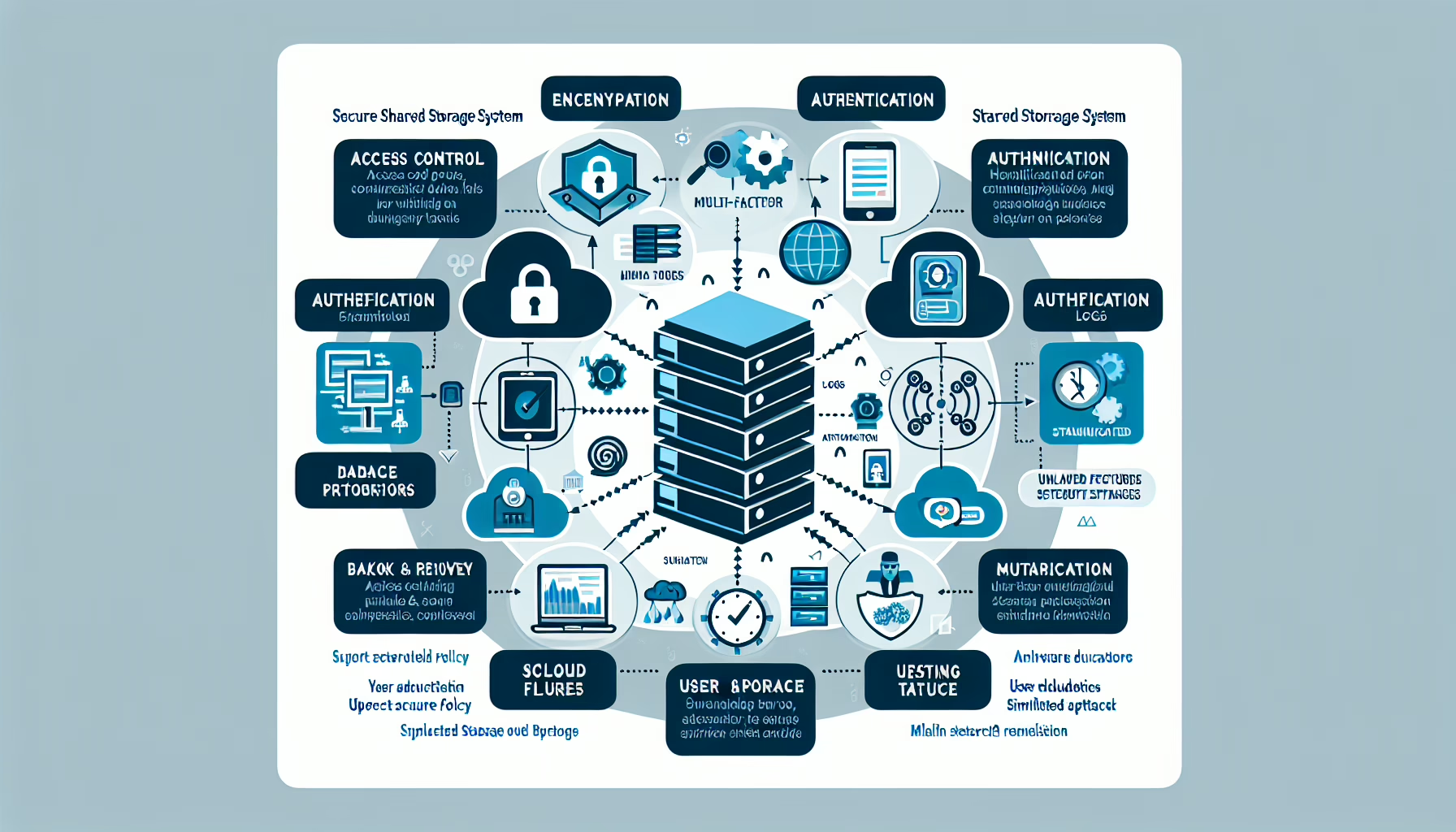
Securing APIs matters because they’re often the gateway to sensitive data and functionality. Here are the practices that actually work:
1. Use strong authentication and authorization
Authentication: Require API consumers to authenticate using secure methods such as OAuth 2.0, OpenID Connect, or API keys. Avoid hardcoding credentials into code.
Authorization: Implement role-based access control (RBAC) or attribute-based access control (ABAC) to ensure users or systems only access resources they’re permitted to.
Enforce the principle of least privilege to limit API access to only what’s necessary.
2. Use HTTPS/TLS for all communication
Enforce HTTPS for all API traffic to encrypt data in transit.
Disable insecure protocols and weak ciphers. Only use TLS 1.2 or higher.
Use certificates from trusted Certificate Authorities (CAs) and rotate them regularly.
3. Implement rate limiting and throttling
Protect your APIs from abuse or DDoS attacks by setting limits on the number of requests a client can make.
Use throttling to ensure fairness in resource usage and prevent API server overload.
4. Validate and sanitize all input
Validate all incoming data to ensure it adheres to expected formats and types.
Sanitize inputs to prevent injection attacks such as SQL injection, XML external entity (XXE) attacks, and cross-site scripting (XSS).
Use parameterized queries and proper encoding techniques.
5. Deploy an API gateway
Centralize security controls — authentication, rate limiting, logging — at the gateway.
Gateways also act as a reverse proxy to hide backend infrastructure.
6. Encrypt sensitive data
Encrypt sensitive data at rest and in transit using strong encryption algorithms.
Avoid exposing sensitive information (API keys, database credentials) in API responses or error messages.
7. Monitor and log API activity
Log API usage: who accessed what, when, and what data was touched.
Review logs regularly for suspicious activity or security anomalies.
Feed logs into a SIEM for analysis and incident response.
8. Version your APIs
Implement API versioning to manage changes without breaking existing clients.
Deprecate and eventually disable older, less secure API versions.
9. Protect against injection attacks
Use input validation and output encoding to avoid injection attacks.
Employ Web Application Firewalls (WAFs) to detect and block malicious requests.
10. Implement secure error handling
Avoid exposing sensitive information in error messages (stack traces, database details).
Return generic error messages to external users while logging detailed errors for internal debugging.
11. Secure API keys and tokens
Treat API keys, tokens, and other credentials as sensitive information.
Store them securely using environment variables, secret management tools, or secure key vaults.
Use short-lived tokens and refresh tokens for better security.
12. Perform regular security testing
Conduct regular penetration tests and vulnerability scans on your APIs.
Use automated tools to identify common vulnerabilities: broken authentication, insecure direct object references (IDOR), misconfigured CORS policies.
Fix identified vulnerabilities promptly.
13. Implement content security policies
Restrict the types of content your APIs can process to prevent attacks like XML bomb attacks or JSON hijacking.
Use Content-Type headers and validate payloads against expected schemas.
14. Apply Kubernetes and cloud-native security practices (if applicable)
If APIs run in Kubernetes, secure the cluster by implementing network policies for isolating API services.
Scan containers for vulnerabilities before deploying them.
Use RBAC to control access to Kubernetes resources.
Use cloud-native tools like AWS API Gateway, Azure API Management, or Google Cloud Endpoints for built-in security features.
15. Keep software and libraries updated
Regularly update API frameworks, libraries, and dependencies to the latest versions.
Monitor for vulnerabilities in third-party components and apply patches promptly.
16. Implement strict CORS policies
Restrict which domains can access your API using strict CORS policies.
Avoid using wildcard * in CORS settings, especially for sensitive endpoints.
17. Consider AI/ML for threat detection
Machine learning can detect unusual API usage patterns: credential stuffing, brute force attempts, data exfiltration.
Integrate with security platforms that use AI-driven analytics for real-time threat detection.
Ali YAZICI is a Senior IT Infrastructure Manager with 15+ years of enterprise experience. While a recognized expert in datacenter architecture, multi-cloud environments, storage, and advanced data protection and Commvault automation , his current focus is on next-generation datacenter technologies, including NVIDIA GPU architecture, high-performance server virtualization, and implementing AI-driven tools. He shares his practical, hands-on experience and combination of his personal field notes and “Expert-Driven AI.” he use AI tools as an assistant to structure drafts, which he then heavily edit, fact-check, and infuse with my own practical experience, original screenshots , and “in-the-trenches” insights that only a human expert can provide.