Implementing a zero-trust security model in your IT infrastructure is a critical step in ensuring robust protection against modern cybersecurity threats. Below is a step-by-step guide on how to achieve this in an environment that includes datacenters, storage, servers, virtualization, Windows, Linux, Kubernetes, and AI workloads:
1. Understand Zero-Trust Principles
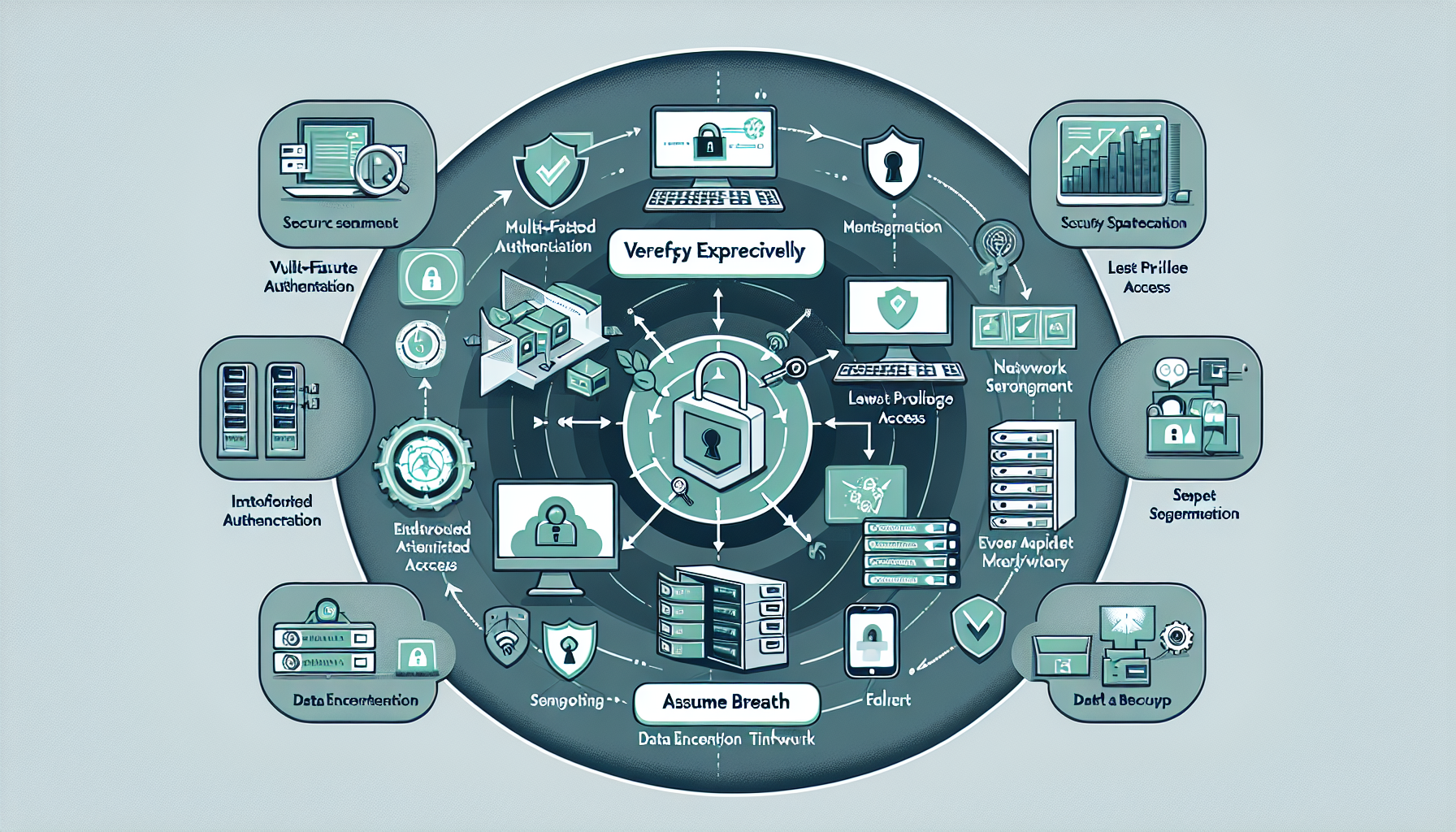
Zero-trust operates on the principle that no entity—whether inside or outside the network—should be trusted by default. Key pillars of zero-trust include:
– Verify explicitly: Always authenticate and authorize based on multiple factors (identity, location, device health, etc.).
– Least privilege access: Grant the minimal level of access necessary for users and systems to perform their tasks.
– Assume breach: Design systems with the assumption that breaches have already occurred, and minimize their potential impact.
2. Conduct a Security Assessment
Map your assets: Identify critical systems, applications, and data across your IT infrastructure, including servers, storage, virtualization platforms, Kubernetes clusters, and AI workloads.
Assess risks: Evaluate potential vulnerabilities in your datacenter, networks, endpoints, and workloads (Windows, Linux, etc.).
Segment your environment: Define clear zones for workloads, sensitive data, and access levels.
3. Implement Identity and Access Management (IAM)
Centralize identity management: Use an IAM solution like Azure AD, Okta, or similar to manage user and system identities.
Multi-factor authentication (MFA): Require MFA for all users, administrators, and service accounts. This applies to Windows/Linux systems, Kubernetes clusters, and management consoles.
Role-based access control (RBAC): Define roles and permissions in tools like Active Directory, Kubernetes RBAC, and storage systems to enforce least-privilege access.
4. Enforce Network Micro-Segmentation
Segment the network: Use VLANs, firewalls, and software-defined networking (SDN) to isolate workloads and limit lateral movement within your datacenter.
Implement Kubernetes network policies: Define network policies to restrict pod-to-pod communication and enforce namespace isolation.
Use firewalls and WAFs: Deploy perimeter and internal firewalls, as well as Web Application Firewalls (WAFs) for applications.
5. Secure Endpoints and Devices
Endpoint protection: Deploy endpoint detection and response (EDR) solutions to secure servers (Windows/Linux), workstations, and virtual machines.
Device compliance checks: Ensure that devices accessing your infrastructure meet security standards (patched, encrypted, etc.).
Secure GPUs for AI workloads: For systems with GPU cards (e.g., NVIDIA), ensure drivers and firmware are up to date and apply security patches regularly.
6. Implement Strong Data Security and Backup Policies
Data encryption: Encrypt data at rest and in transit using protocols like TLS and AES. This applies to storage systems, backups, and data flowing through Kubernetes or AI pipelines.
Backup security: Harden backup systems by isolating them from production environments using air-gapped or immutable backups. Encrypt backup data and use strong authentication.
Data classification: Identify sensitive data and apply stricter controls (e.g., in databases, storage arrays, and AI models).
7. Deploy Continuous Monitoring and Threat Detection
Centralized logging: Aggregate logs from servers (Windows/Linux), Kubernetes clusters, firewalls, and storage systems into a SIEM solution (e.g., Splunk, Elastic Stack, or Azure Sentinel).
Behavioral analytics: Use AI/ML-powered tools to detect anomalies in user behavior and network traffic.
Endpoint monitoring: Enable monitoring for GPUs and AI workloads to detect unusual usage patterns (e.g., crypto mining or unauthorized access).
8. Protect Kubernetes and Virtualized Environments
Kubernetes security:
Use tools like kube-bench to evaluate compliance with security benchmarks.
Implement secrets management using solutions like HashiCorp Vault or Kubernetes Secrets.
Regularly scan container images for vulnerabilities using tools like Trivy or Aqua Security.
Virtualization security:
Harden hypervisors by disabling unused features.
Monitor VM activity for anomalies.
Implement VM isolation where possible.
9. Automate Security Policies
Policy-as-code: Use tools like Terraform, Ansible, or Puppet to automate and enforce security policies across your IT infrastructure.
Kubernetes admission controllers: Use tools like Open Policy Agent (OPA) or Kyverno to enforce security policies on Kubernetes resources.
AI-driven automation: Leverage AI to detect and respond to security incidents in real-time.
10. Train Your Team and Foster a Security Culture
Security awareness: Conduct regular training for your IT team and end-users on phishing, social engineering, and other threats.
Incident response drills: Simulate security incidents to test and refine your incident response plan.
Collaboration: Foster collaboration between development, operations, and security teams (DevSecOps).
11. Regularly Test and Improve
Vulnerability assessments: Conduct regular penetration testing and vulnerability scans on your infrastructure.
Patch management: Regularly update servers, storage, Kubernetes nodes, and GPU drivers to address known vulnerabilities.
Review policies: Periodically review and update your zero-trust policies as your environment evolves.
12. Partner with Trusted Vendors
Leverage security tools: Use enterprise-grade security solutions from trusted vendors for datacenters, endpoints, and cloud environments.
Stay compliant: Ensure your infrastructure adheres to industry standards like ISO 27001, NIST, or GDPR.
Conclusion
Implementing zero-trust requires a mix of technical controls, process improvements, and cultural changes. Start small by focusing on high-priority areas, then expand as your team becomes more familiar with zero-trust concepts. By adopting this model across your datacenter, virtualization platforms, Kubernetes clusters, and AI workloads, you can greatly enhance your organization’s security posture and resilience.
Ali YAZICI is a Senior IT Infrastructure Manager with 15+ years of enterprise experience. While a recognized expert in datacenter architecture, multi-cloud environments, storage, and advanced data protection and Commvault automation , his current focus is on next-generation datacenter technologies, including NVIDIA GPU architecture, high-performance server virtualization, and implementing AI-driven tools. He shares his practical, hands-on experience and combination of his personal field notes and “Expert-Driven AI.” he use AI tools as an assistant to structure drafts, which he then heavily edit, fact-check, and infuse with my own practical experience, original screenshots , and “in-the-trenches” insights that only a human expert can provide.