Palo Alto Firewalls Rooted by Two Zero‑Day Flaws; DGX GB300 Runs AI
Two zero‑day flaws let attackers root Palo Alto firewalls, while NVIDIA’s DGX Station GB300 desktop supercomputer runs agentic AI workloads.
Articles about storage, backup, virtualization, technology, innovation, programming, leadership, management,... etc
Articles about storage, backup, virtualization, technology, innovation, programming, leadership, management,... etc
Two zero‑day flaws let attackers root Palo Alto firewalls, while NVIDIA’s DGX Station GB300 desktop supercomputer runs agentic AI workloads.
Optimizing IT Infrastructure for High-Performance Financial Applications: A Practical Guide from the Datacenter Floor Financial applications—particularly those driving real-time trading, risk analysis, fraud detection, and compliance reporting—are among the most demanding workloads in enterprise IT. In my experience managing large-scale datacenters for banking and fintech clients, the difference between an infrastructure that barely survives peak […]
Video conferencing infrastructure lives at the intersection of network, compute, and storage. Get any of the three wrong and users feel it immediately. Here’s what to plan for. 1. Assess Requirements User count: internal and external participants Concurrent meetings: peak simultaneous sessions Bandwidth: calculate per-stream needs for video, audio, and screen sharing Client platforms: Windows, […]
Hybrid AI/ML workloads run across on-premises infrastructure and public cloud. Here’s how to configure your environment for them. 1. Assess Your Requirements Workload Analysis Determine the type of AI/ML models you’ll run (training, inference, or both). Identify compute, storage, and networking needs. Decide whether you need GPUs, TPUs, or CPUs. Data Location Map where your […]
Optimizing IT infrastructure for real-time analytics means balancing performance, scalability, reliability, and cost. Here are the key areas to address: 1. Assess Requirements Measure your actual data ingest rates: volume, velocity, and variety. Define latency thresholds your analytics can tolerate. Profile workloads to size CPU, GPU, memory, storage, and network. 2. Upgrade Hardware Infrastructure Select […]
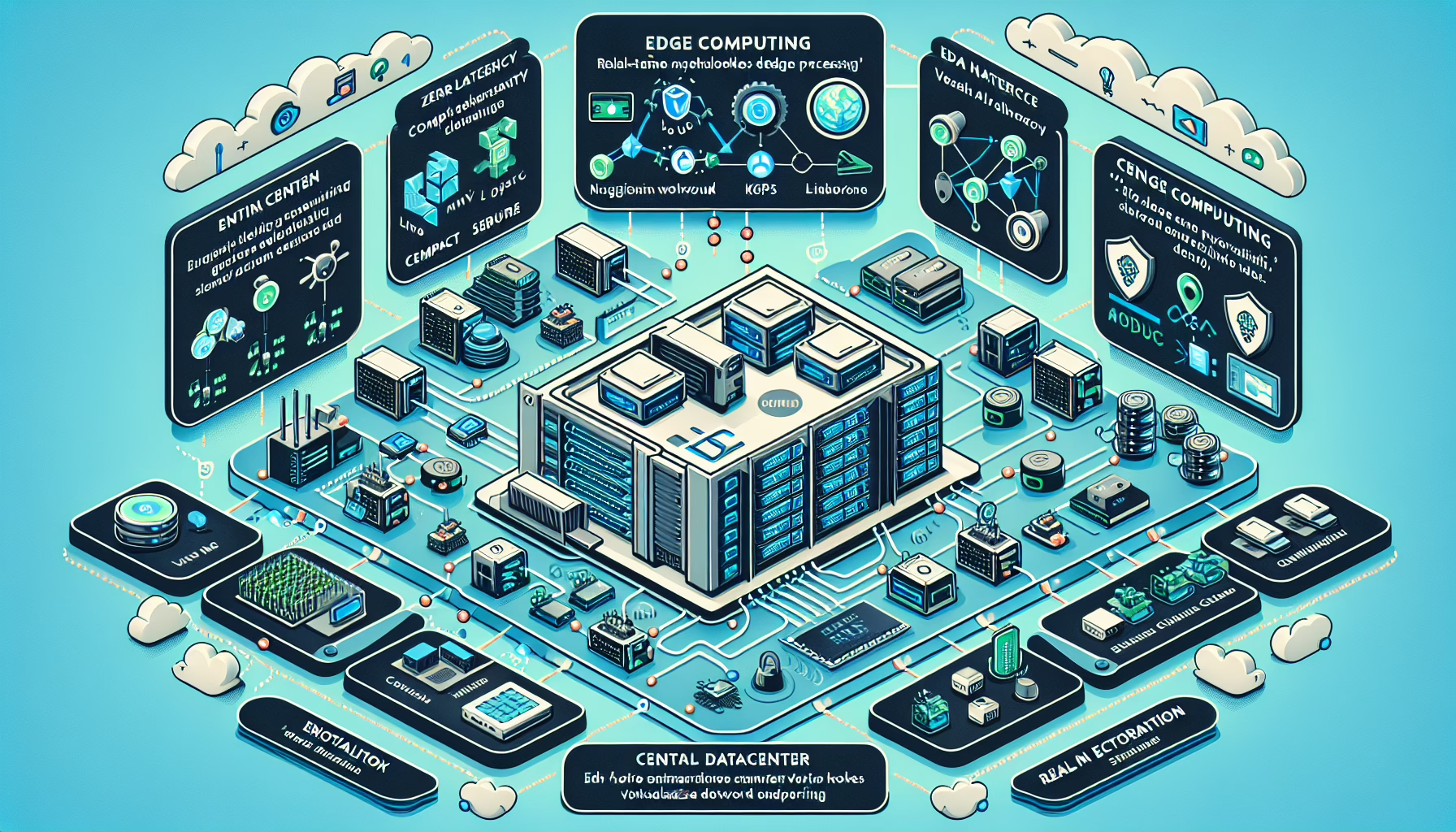
1. Define Use Cases and Requirements Identify workloads that need low latency, high bandwidth, or real-time processing — AI inference, IoT, video analytics. Clarify the business objectives: reducing latency, improving performance, offloading central datacenter resources. Assess how the edge solution will scale over time and accommodate future needs. 2. Plan the Edge Architecture Design a […]