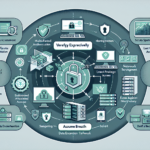
Insider threats come from malicious intent and accidental actions alike. You need technical controls, policies, monitoring, and education to address both. Here are the key steps.
1. Implement Role-Based Access Control (RBAC)
Apply the principle of least privilege: limit access to only the resources each role requires.
Enforce segregation of duties so no single person has full control over sensitive systems.
Deploy RBAC across datacenter systems, virtualization platforms (VMware, Hyper-V), Kubernetes clusters, and storage platforms.
2. Monitor User Activity
Enable audit logging on all systems — Windows, Linux, Kubernetes, storage — and review logs regularly for anomalies.
Feed logs into a SIEM (Splunk, ELK, Microsoft Sentinel) to correlate events and detect suspicious patterns.
Use file integrity monitoring on critical files and directories in storage systems.
3. Multi-Factor Authentication (MFA)
Require MFA for all access to critical systems: servers, Kubernetes clusters, virtualization platforms, backup systems.
Enforce stricter MFA policies (hardware tokens, phishing-resistant factors) for administrators and privileged accounts.
4. Endpoint Security
Harden every endpoint that touches infrastructure: antivirus/antimalware, full-disk encryption, automated patch management.
Disable USB ports on servers and restrict them on endpoints to block unauthorized data exfiltration.
5. Data Loss Prevention (DLP)
Deploy DLP to monitor and block attempts to move sensitive data outside the organization.
Restrict access to storage systems; encrypt critical backups both in transit and at rest.
6. Network Segmentation
Segment the network to isolate sensitive systems — servers, storage, Kubernetes clusters — from less critical zones.
Apply zero trust principles: verify every connection and user, regardless of network location.
7. Regular Security Training
Run recurring training so employees recognize phishing, social engineering, and other tactics targeting insiders.
Conduct simulated phishing campaigns to measure awareness and reinforce behavior.
8. Endpoint Monitoring and Behavioral Analytics
Use User Behavior Analytics (UBA) to flag unusual activity patterns that may indicate malicious or accidental insider threats.
Deploy Endpoint Detection and Response (EDR) to catch suspicious endpoint behavior in real time.
9. Secure Backup Systems
Store backups in immutable format to prevent tampering by malicious insiders.
Restrict backup server access to authorized personnel only.
Audit backup logs regularly for suspicious activity.
10. Kubernetes-Specific Protections
Enforce Pod Security Standards to prevent unauthorized access and privilege escalation.
Secure secrets with HashiCorp Vault or Kubernetes Secrets Management.
Apply RBAC within clusters to control resource access.
11. Background Checks and Access Reviews
Conduct thorough background checks during hiring to identify potential risks.
Monitor for anomalous user behavior that may indicate elevated risk; tie this to HR processes and legal review.
Perform periodic access reviews to ensure permissions still match roles.
Ali YAZICI is a Senior IT Infrastructure Manager with 15+ years of enterprise experience. While a recognized expert in datacenter architecture, multi-cloud environments, storage, and advanced data protection and Commvault automation , his current focus is on next-generation datacenter technologies, including NVIDIA GPU architecture, high-performance server virtualization, and implementing AI-driven tools. He shares his practical, hands-on experience and combination of his personal field notes and “Expert-Driven AI.” he use AI tools as an assistant to structure drafts, which he then heavily edit, fact-check, and infuse with my own practical experience, original screenshots , and “in-the-trenches” insights that only a human expert can provide.