Implementing georedundancy for IT infrastructure means designing systems and processes that keep your applications, data, and services available and secure even when a disaster or outage takes down an entire geographic location. Here’s a practical guide:
1. Understand Your Requirements
RPO (Recovery Point Objective): How much data loss is acceptable? This drives replication frequency.
RTO (Recovery Time Objective): How quickly must services be restored?
Critical Components: Identify mission-critical systems, applications, and data that require georedundancy.
Compliance: Factor in legal or regulatory requirements (e.g., GDPR, HIPAA).
2. Select Geographically Diverse Locations
Choose sites in different regions or countries to minimize risk from localized disasters (earthquakes, floods, power-grid failures).
Balance proximity to users for latency against redundancy needs.
3. Design a Multi-Site Architecture
Active-Active: Both sites serve traffic simultaneously. Requires solid load balancing and synchronization.
Active-Passive: One site runs production; the other stands by for failover. Simpler to implement but typically has longer failover times.
4. Implement Data Replication
Storage Solutions: Use enterprise-grade storage with built-in remote replication (e.g., NetApp SnapMirror, Dell EMC SRDF, Zerto).
Database Replication: Configure database-level replication (e.g., SQL AlwaysOn, Oracle Data Guard, MySQL replication) to keep data consistent across sites.
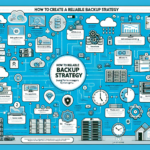
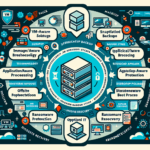
Backup Strategy: Maintain off-site backups with tools like Veeam, Commvault, or Cohesity for point-in-time recovery.
5. Deploy Cloud or Hybrid Solutions
Public cloud providers offer built-in georedundancy services:
Ali YAZICI is a Senior IT Infrastructure Manager with 15+ years of enterprise experience. While a recognized expert in datacenter architecture, multi-cloud environments, storage, and advanced data protection and Commvault automation , his current focus is on next-generation datacenter technologies, including NVIDIA GPU architecture, high-performance server virtualization, and implementing AI-driven tools. He shares his practical, hands-on experience and combination of his personal field notes and “Expert-Driven AI.” he use AI tools as an assistant to structure drafts, which he then heavily edit, fact-check, and infuse with my own practical experience, original screenshots , and “in-the-trenches” insights that only a human expert can provide.