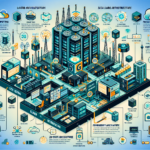
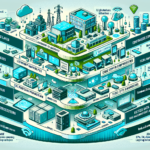
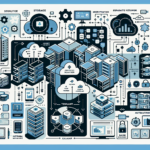
Configuring IT infrastructure for supply chain management (SCM) systems means designing a resilient, scalable, and secure environment that ensures performance, availability, and data integrity. Here’s a step-by-step guide:
1. Understand the Requirements
- SCM Software Requirements: Identify supported operating systems, databases, middleware, and resource needs (CPU, RAM, storage).
- Performance Expectations: Define expected transaction volumes, concurrent users, and response-time targets.
- Integration Needs: Map integration points with ERP, CRM, IoT devices, and BI tools.
- Compliance: Factor in GDPR, ISO 27001, HIPAA, or other applicable standards.
2. Design the Architecture
-
Deployment Model:
- On-premises: Full hardware control, high upfront cost.
- Cloud: Scalable, pay-as-you-go (AWS, Azure, Google Cloud).
- Hybrid: Mix of both, useful for legacy integration and sensitive data.
-
High Availability and Disaster Recovery:
- Redundant hardware, load balancers, and automatic failover.
- Backup and replication strategies with tested RPO/RTO.
-
Network Design:
- Segment environments with VLANs (production, test, development).
- Firewalls, VPNs, and TLS for data in transit.
3. Hardware Selection and Configuration
-
Servers:
- Enterprise-grade (Dell PowerEdge, HPE ProLiant, or equivalent).
- High-core-count CPUs (Intel Xeon or AMD EPYC) and sufficient RAM.
-
Storage:
- SSDs for performance tiers, HDDs for capacity tiers.
- SAN or NAS for centralized storage.
- Storage tiering to balance cost and IOPS.
-
Backup Infrastructure:
- Solutions like Veeam, Commvault, or Cohesity.
- Regular backup schedules with periodic recovery tests.
- Deduplication and compression to reduce footprint.
-
GPU Acceleration (If Needed):
- NVIDIA GPUs (e.g., A100, H100) for AI/ML model training and inference.
4. Virtualization and Containers
-
Virtualization:
- VMware vSphere, Microsoft Hyper-V, or KVM.
- Dynamic resource allocation for variable workloads.
-
Container Orchestration:
- Kubernetes (K8s) for container management.
- Managed services: AKS, EKS, or GKE in cloud environments.
5. Operating Systems and Middleware
- OS: Enterprise Linux (RHEL, Ubuntu, SUSE) or Windows Server.
- Middleware: Apache Kafka, RabbitMQ, or Redis for messaging and caching.
6. Database Configuration
-
Selection:
- Relational: PostgreSQL, MySQL, Oracle for structured data.
- NoSQL: MongoDB, Cassandra, DynamoDB for unstructured or high-volume data.
-
Performance Optimization:
- Indexing, partitioning, and query caching.
- Replication for failover and read scaling.
7. Security
-
Access Control:
- IAM with least-privilege enforcement.
- MFA for all administrative and remote access.
-
Data Encryption:
- AES-256 at rest, TLS 1.2/1.3 in transit.
-
Monitoring and Incident Response:
- SIEM (Splunk, Elastic Security) for anomaly detection.
- Documented, tested incident-response playbooks.
8. AI and Analytics Integration
- Apply ML for demand forecasting, inventory optimization, and logistics routing.
- Frameworks: TensorFlow, PyTorch, scikit-learn.
- Run training/inference on GPU-enabled nodes.
9. Monitoring and Maintenance
- Infrastructure monitoring with Prometheus/Grafana, Zabbix, or Nagios.
- Automate patching and configuration drift remediation via Ansible, Chef, or Puppet.
10. Testing and Deployment
- Testing: Performance, security, and DR validation before go-live.
- Deployment: CI/CD pipelines (Jenkins, GitLab CI/CD) with automated rollback.
11. Training and Documentation
- Train IT staff and end users on the SCM platform.
- Maintain living docs: architecture diagrams, config baselines, runbooks.
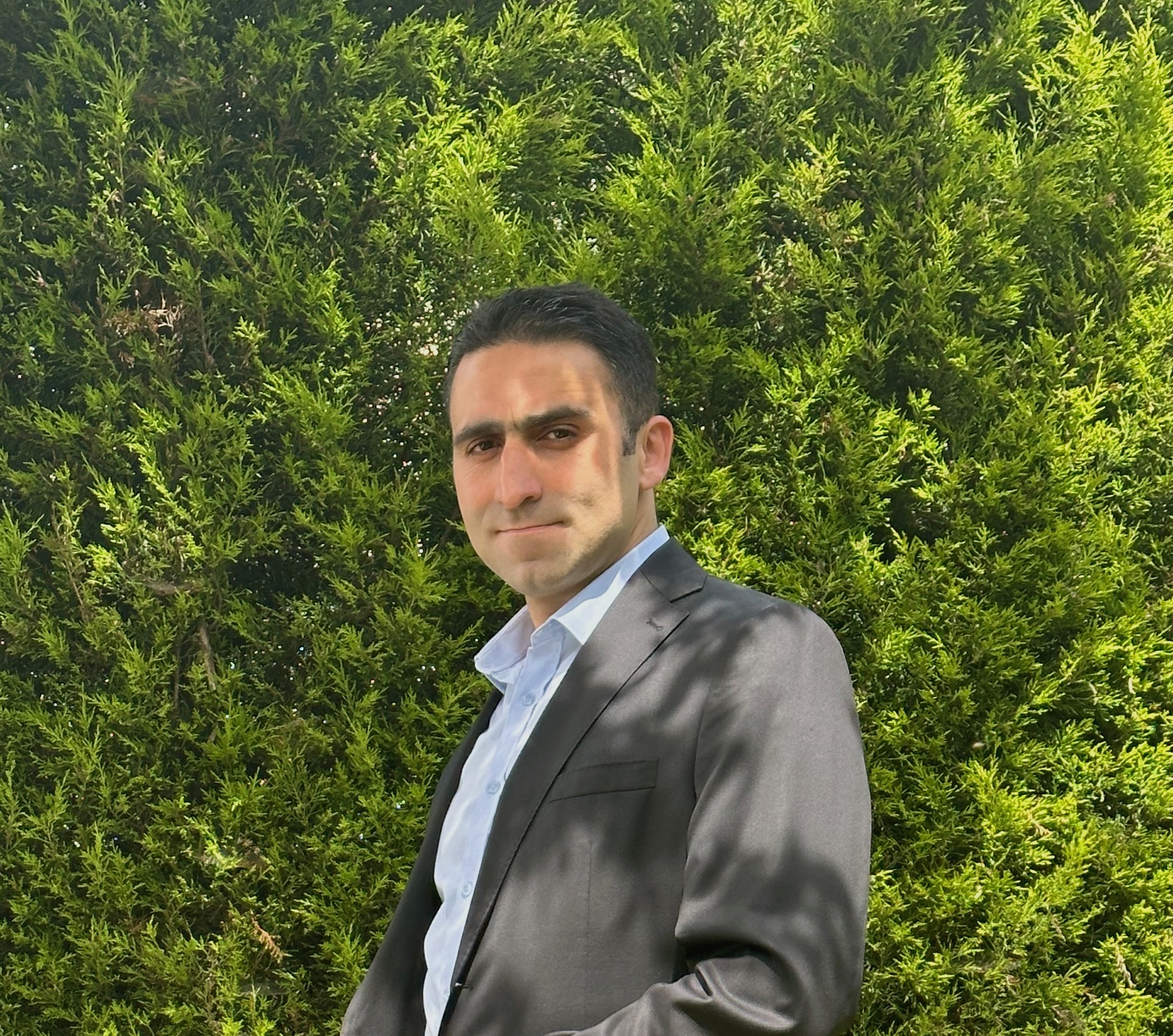
Ali YAZICI is a Senior IT Infrastructure Manager with 15+ years of enterprise experience. While a recognized expert in datacenter architecture, multi-cloud environments, storage, and advanced data protection and Commvault automation , his current focus is on next-generation datacenter technologies, including NVIDIA GPU architecture, high-performance server virtualization, and implementing AI-driven tools. He shares his practical, hands-on experience and combination of his personal field notes and “Expert-Driven AI.” he use AI tools as an assistant to structure drafts, which he then heavily edit, fact-check, and infuse with my own practical experience, original screenshots , and “in-the-trenches” insights that only a human expert can provide.
If you found this content valuable, [support this ad-free work with a coffee]. Connect with him on [LinkedIn].
Related Posts: