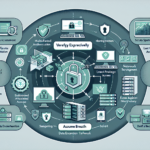
Research and development environments hold sensitive data, intellectual property, and experimental workloads that make them high-value targets. Here are the key controls to put in place.
1. Understand the Environment and Data
Classify data: Identify and categorize sensitive data — intellectual property, proprietary research, customer data.
Risk assessment: Map vulnerabilities and threats specific to your R&D workflows.
Separate dev, test, and production: Enforce strict segregation between these environments.
2. Access Control and Identity Management
Role-Based Access Control (RBAC): Grant only the permissions each role needs.
Multi-Factor Authentication (MFA): Require MFA for all access to critical systems.
Zero Trust: Verify every user and device before granting access.
Privileged Access Management (PAM): Monitor and secure admin and researcher privileged accounts.
3. Network Security
Segmentation: Use VLANs or SDN to isolate R&D networks from the rest of the organization.
Firewall rules: Restrict traffic to and from the R&D environment.
VPNs and secure remote access: Provide encrypted VPNs for remote connections.
IDS/IPS: Deploy intrusion detection and prevention to monitor and block malicious activity.
4. Endpoint Security
Patch management: Keep all workstations, servers, and devices current.
Endpoint protection: Run antivirus, anti-malware, and EDR tools.
Device encryption: Encrypt laptops, mobile devices, and external storage used by researchers.
BYOD policies: Define and enforce policies for personal devices accessing R&D systems.
5. Data Security
Encryption: Protect sensitive data at rest and in transit.
Backup and recovery: Implement encrypted, securely stored backups with tested restore procedures.
Data Loss Prevention (DLP): Deploy DLP to prevent unauthorized sharing or leakage.
6. Application and Software Security
Secure coding practices: Enforce secure coding standards for developers.
Code reviews: Conduct regular audits and vulnerability scans on applications.
Container security: For Kubernetes and other containerized environments, implement image scanning, runtime security, and namespace isolation.
Dependency management: Update libraries and frameworks regularly to avoid third-party vulnerabilities.
7. Kubernetes and Virtualization Security
Kubernetes best practices:
Use RBAC within clusters.
Restrict access to kube-apiserver and apply network policies.
Scan container images for vulnerabilities before deployment.
Monitor cluster activity with Prometheus, Grafana, or specialized tools (e.g., Aqua, Sysdig).
Virtualization best practices:
Isolate VMs by project or department.
Use hardened hypervisor configurations.
Patch hypervisors and VMs regularly.
8. GPU and AI Security
Secure AI models: Protect models and training data from theft or manipulation.
GPU access control: Restrict GPU resources to authorized users and groups.
Monitor resource usage: Track GPU utilization to detect unauthorized activity.
Secure AI pipelines: Ensure data integrity and defend against adversarial attacks.
9. Physical Security
Restricted access: Limit entry to data centers, server rooms, and labs to authorized personnel.
Surveillance: Monitor critical areas with cameras and logging.
Environmental controls: Maintain proper temperature, humidity, and fire suppression.
10. Monitoring and Incident Response
Real-time monitoring: Use SIEM to aggregate logs and alerts.
Incident response plan: Build and regularly test a plan tailored to R&D.
Audit logs: Keep detailed system activity logs for forensics.
Threat intelligence: Track emerging threats and vulnerabilities relevant to your stack.
11. Training and Awareness
Security training: Teach researchers, developers, and IT staff relevant best practices.
Phishing awareness: Run regular simulations and training.
Policy enforcement: Ensure staff understand and follow data handling and access policies.
12. Regular Assessments
Penetration testing: Conduct regular pen tests to find infrastructure weaknesses.
Vulnerability scanning: Run automated scans on servers, containers, and endpoints.
Compliance checks: Verify adherence to GDPR, HIPAA, and industry standards.
13. Cloud-Based R&D Security
If your R&D infrastructure runs partly or fully in the cloud:
Cloud Security Posture Management (CSPM): Use CSPM tools to catch misconfigurations.
Encryption in cloud: Ensure all stored data is encrypted.
Shared responsibility model: Know where your security duties end and the provider’s begin.
Security is an ongoing process. Continuous monitoring, timely updates, and regular staff training keep the risk level down.
Ali YAZICI is a Senior IT Infrastructure Manager with 15+ years of enterprise experience. While a recognized expert in datacenter architecture, multi-cloud environments, storage, and advanced data protection and Commvault automation , his current focus is on next-generation datacenter technologies, including NVIDIA GPU architecture, high-performance server virtualization, and implementing AI-driven tools. He shares his practical, hands-on experience and combination of his personal field notes and “Expert-Driven AI.” he use AI tools as an assistant to structure drafts, which he then heavily edit, fact-check, and infuse with my own practical experience, original screenshots , and “in-the-trenches” insights that only a human expert can provide.