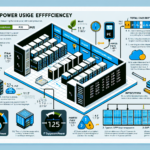
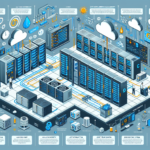
Monitoring energy efficiency in a data center matters for cost control, sustainability, and keeping infrastructure healthy. Here are the practices and tools that work.
1. Utilize Power Usage Effectiveness (PUE)
PUE remains the standard metric for data center energy efficiency. Calculate it as:
PUE = Total Facility Energy / IT Equipment Energy
A PUE of 1.0 is ideal. Most facilities run between 1.2 and 2.0.
Install energy meters to track total facility consumption (cooling, lighting, power distribution).
Measure IT equipment energy separately (servers, storage, network gear).
2. Real-Time Monitoring Tools
Deploy tooling to watch energy use across the facility in real time.
DCIM (Data Center Infrastructure Management): Schneider Electric EcoStruxure, Vertiv Trellis, Nlyte.
IoT sensors: Monitor temperature, humidity, and power draw at rack or device granularity.
Server monitoring: Prometheus, Grafana, or Zabbix for resource utilization and thermal metrics.
3. Temperature and Cooling Optimization
Cooling typically consumes 30–40% of a data center’s energy. Optimizing it yields the biggest gains.
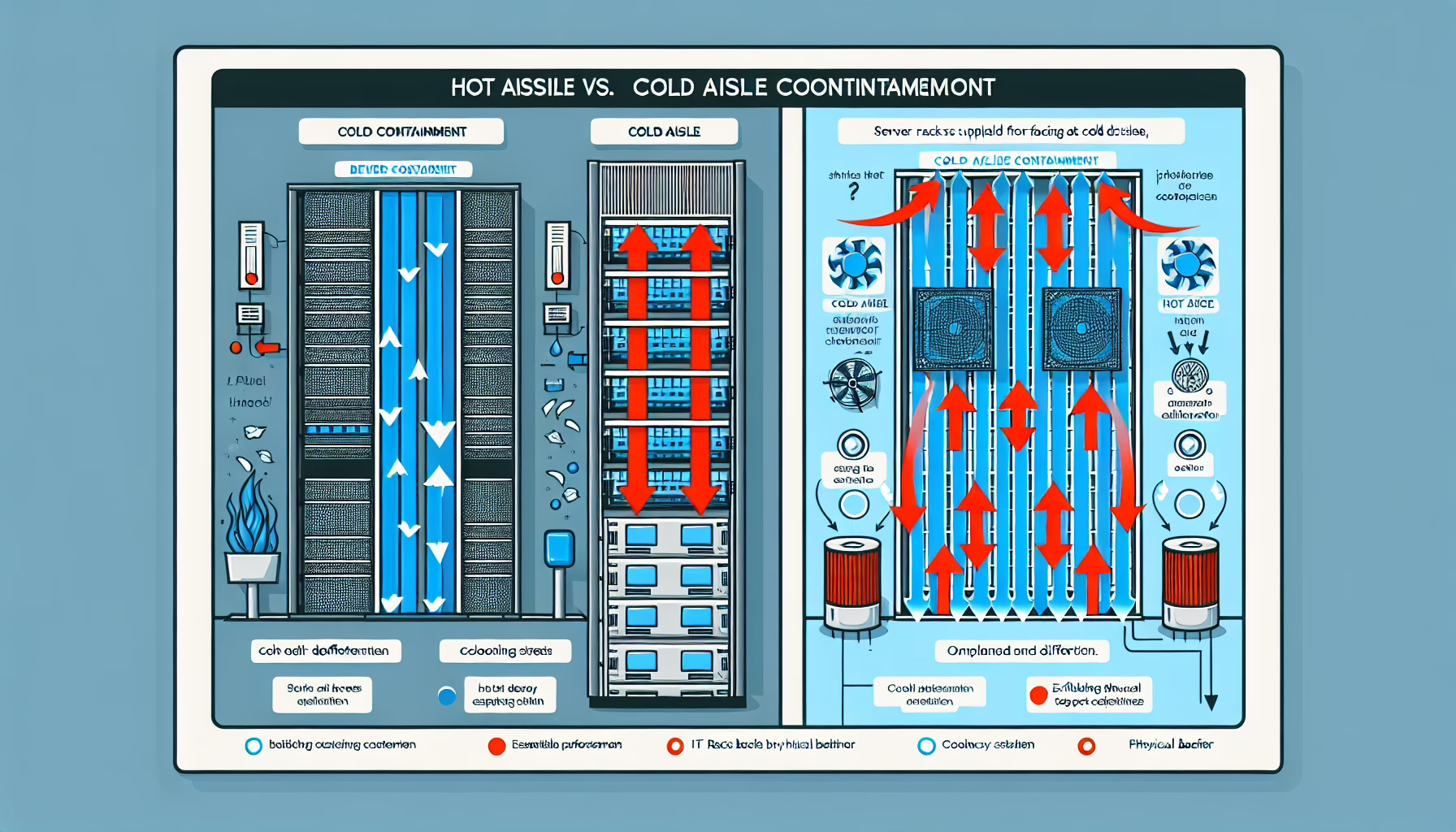
Implement hot aisle/cold aisle containment to manage airflow.
Deploy liquid cooling for high-density racks or GPU-heavy workloads.
Follow ASHRAE thermal guidelines to avoid overcooling.
Consider adaptive cooling systems that adjust in real time based on load and sensor data.
4. Use Energy-Efficient Hardware
Consolidate workloads through virtualization (VMware, Hyper-V) or containerization (Kubernetes).
Refresh to efficient servers, modern GPUs for AI workloads, and low-power storage.
Prefer SSDs over HDDs where possible; they draw less power.
Spec hardware certified to ENERGY STAR or equivalent efficiency standards.
5. Virtualization and Workload Optimization
Consolidate physical servers using virtualization platforms (VMware, Hyper-V, Proxmox).
Use Kubernetes or similar orchestration to maximize utilization and cut idle power draw.
Schedule batch workloads for cooler hours or shift them to regions with lower energy costs.
6. Renewable Energy Integration
Track the percentage of energy sourced from renewables (solar, wind, hydro).
Contract with green energy providers or evaluate on-site generation like solar arrays.
7. Benchmarking and Reporting
Benchmark PUE, energy trends, and carbon footprint against industry standards regularly.
Build dashboards in Grafana, Power BI, or your DCIM to automate reporting.
8. Conduct Regular Audits
Run energy audits to find waste in power delivery, cooling, and workload placement.
Use third-party assessors or tools like ENERGY STAR Portfolio Manager.
9. Metrics to Monitor
Total facility power consumption
Server utilization rates — identify underused hosts
Cooling efficiency — CRAC/CRAH performance or liquid cooling loop metrics
Carbon emissions — tie energy use to emission factors for reporting
10. Implement Predictive Maintenance
Watch for UPS, cooling, or server components drawing excess power due to wear.
Replace or service degrading equipment before it fails or wastes energy.
11. Employee Awareness and Training
Make sure the team understands how their actions affect energy use.
Enforce habits: power down unused gear, schedule backups and maintenance off-peak.
Ali YAZICI is a Senior IT Infrastructure Manager with 15+ years of enterprise experience. While a recognized expert in datacenter architecture, multi-cloud environments, storage, and advanced data protection and Commvault automation , his current focus is on next-generation datacenter technologies, including NVIDIA GPU architecture, high-performance server virtualization, and implementing AI-driven tools. He shares his practical, hands-on experience and combination of his personal field notes and “Expert-Driven AI.” he use AI tools as an assistant to structure drafts, which he then heavily edit, fact-check, and infuse with my own practical experience, original screenshots , and “in-the-trenches” insights that only a human expert can provide.